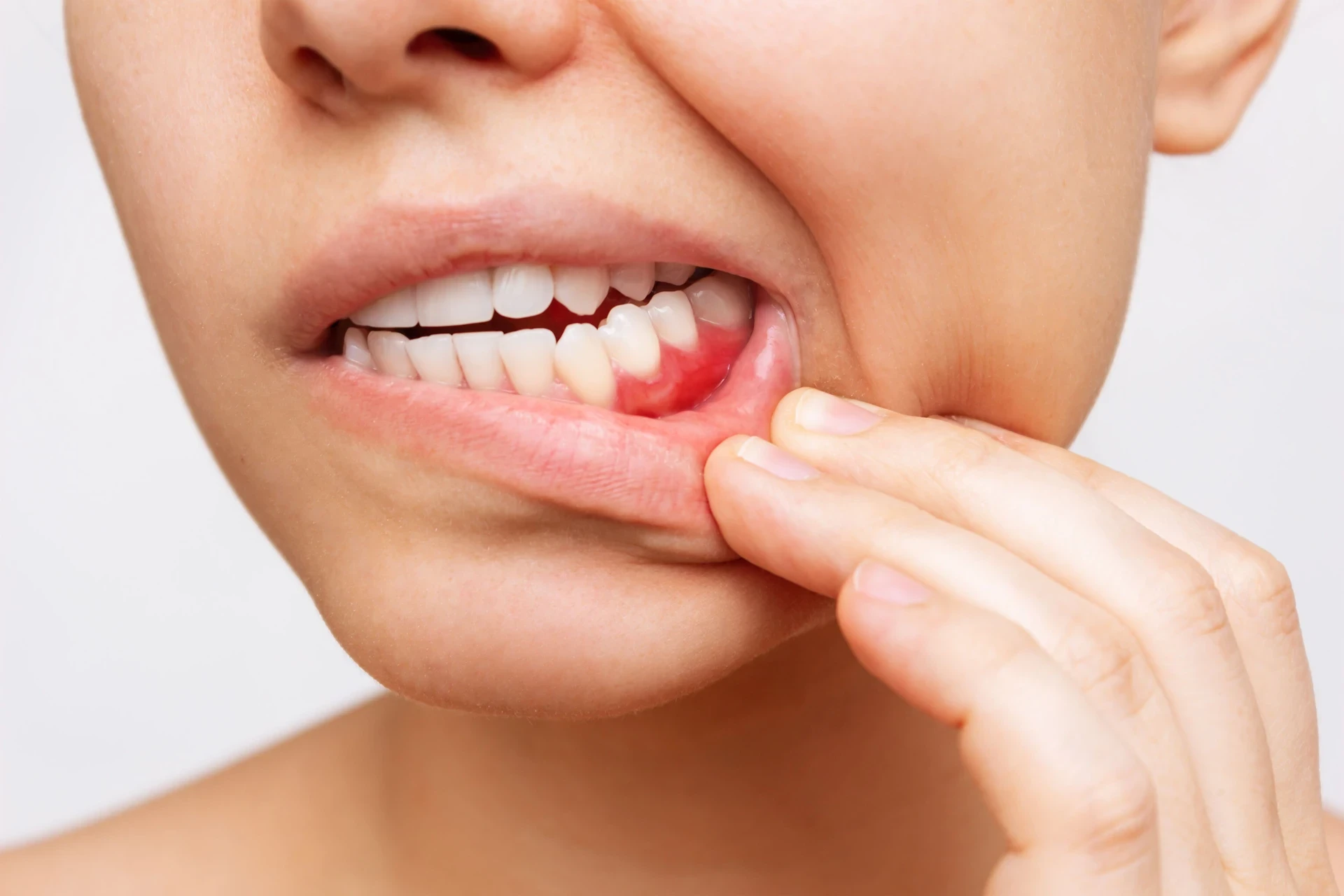
Stages of Periodontal Disease
Periodontal disease gets worse in stages. Each stage does more damage to your gums and the bone that holds your teeth. During your exam, we measure the space between your teeth and gums, called a pocket. Healthy pockets measure 1 to 3 millimeters. Deeper pockets tell us how far the disease has spread.
Stage 1: Gingivitis
Plaque builds up along your gumline and inflames your gums. You may notice red, swollen gums that bleed when you brush or floss. The good news: gingivitis hasn’t reached the bone yet, and a professional cleaning plus better daily care can reverse it.
Stage 2: Early Periodontitis
The infection moves below your gumline and starts to break down the bone around your teeth. Pockets deepen to about 4 to 5 millimeters. You may notice bad breath and gums that pull away from your teeth. A deep cleaning (scaling and root planing) usually stops the damage at this stage.
Stage 3: Moderate Periodontitis
Bone loss continues and pockets reach about 6 to 7 millimeters. Your gums may recede further, your teeth may feel sensitive, and pus may form around them. Treatment often combines deep cleaning, antibiotics and laser gum therapy.
Stage 4: Advanced Periodontitis
The infection destroys a large amount of bone, and pockets measure 7 millimeters or deeper. Teeth may loosen, shift or fall out, and chewing can hurt. Treatment at this stage may include laser therapy, gum surgery, bone grafts, or tooth replacement with implants or dentures.
You can’t reverse lost bone, but you can stop the disease from taking more.
Periodontal Treatment Options at KA Dental
We match your treatment to the stage of your disease. In most cases, we start with the least invasive option and only move to advanced care when your gums need it.
Non-surgical treatments
Scaling and root planing. We remove tartar and bacteria from deep below your gumline, then smooth your tooth roots so your gums can reattach. We numb each area first and often treat one section of your mouth per visit.
Antibiotic therapy. We place antibiotic gels or microspheres directly into deep pockets, or prescribe oral antibiotics, to wipe out infection that cleaning alone can’t reach.
Laser periodontal therapy. Our dental laser removes diseased tissue and kills bacteria inside the pocket without a scalpel. You get less bleeding, less swelling and a faster recovery than traditional surgery.
Advanced treatments
Pocket reduction surgery. When pockets stay too deep to clean, we fold back the gums, remove bacteria and tartar, and secure the gums snugly around the tooth.
Bone grafting. A graft rebuilds bone that periodontitis destroyed and gives loose teeth a stronger foundation.
Gum grafting. We cover exposed roots with new tissue to stop recession and reduce sensitivity.
Tooth replacement. If a tooth can’t be saved, we restore your smile with dental implants, bridges or dentures.
Ongoing care
Periodontal disease can come back. After treatment, we see you every three to four months for periodontal maintenance cleanings. We measure your pockets, remove new buildup and catch any flare-up early.
Preventing Gum Disease Long-Term
Gum disease responds well to treatment, but it can return if plaque builds up again. These habits keep your gums healthy for the long run:
Brush twice a day for two minutes. Use a soft-bristle brush and angle it toward your gumline, where plaque hides. An electric toothbrush makes this easier.
Clean between your teeth every day. Floss, interdental brushes or a water flosser reach the plaque your toothbrush misses.
Use an antibacterial mouthwash. Ask us which rinse fits your needs.
Quit tobacco. Smoking and vaping weaken your gums’ ability to fight infection and heal. Smokers face a much higher risk of gum disease and tooth loss.
Manage your health conditions. Diabetes, stress and some medications affect your gums. Keep your blood sugar in check and tell us about any new medications.
Eat a balanced diet. Cut back on sugary snacks and drinks, and eat plenty of fruits, vegetables and foods rich in vitamin C and calcium.
Watch for early warning signs. Bleeding, swelling or bad breath means your gums need attention. Call us right away.
Keep every cleaning appointment. Most patients need a cleaning every six months. If you’ve had gum disease, we’ll see you every three to four months for periodontal maintenance.
Healthy gums take steady care, not a one-time fix. We partner with you at every visit to keep your gums strong and your teeth in place.
Protect Your Gums – Schedule an Evaluation
Consult the best dentists in town at any of our beautiful dental clinics for a great time and a lasting smile.
Accepting New Patients
starting from as low as $29
Same Day Treatment

Established since 2012
50+ Years Combined Experience

5 Modern Locations

25000+ Happy Clients
5000+ Implants Placed

10000+ Smile Makeovers

In house Lab for Same Day Dentistry