Consult the best dentists in town at any of our beautiful dental clinics for a great time and a lasting smile.
Accepting New Patients
starting from as low as $29
Same Day Treatment

Established since 2012
50+ Years Combined Experience

5 Modern Locations

25000+ Happy Clients
5000+ Implants Placed

10000+ Smile Makeovers

In house Lab for Same Day Dentistry
Frequently Asked Questions for Braces
What age is best to start braces?
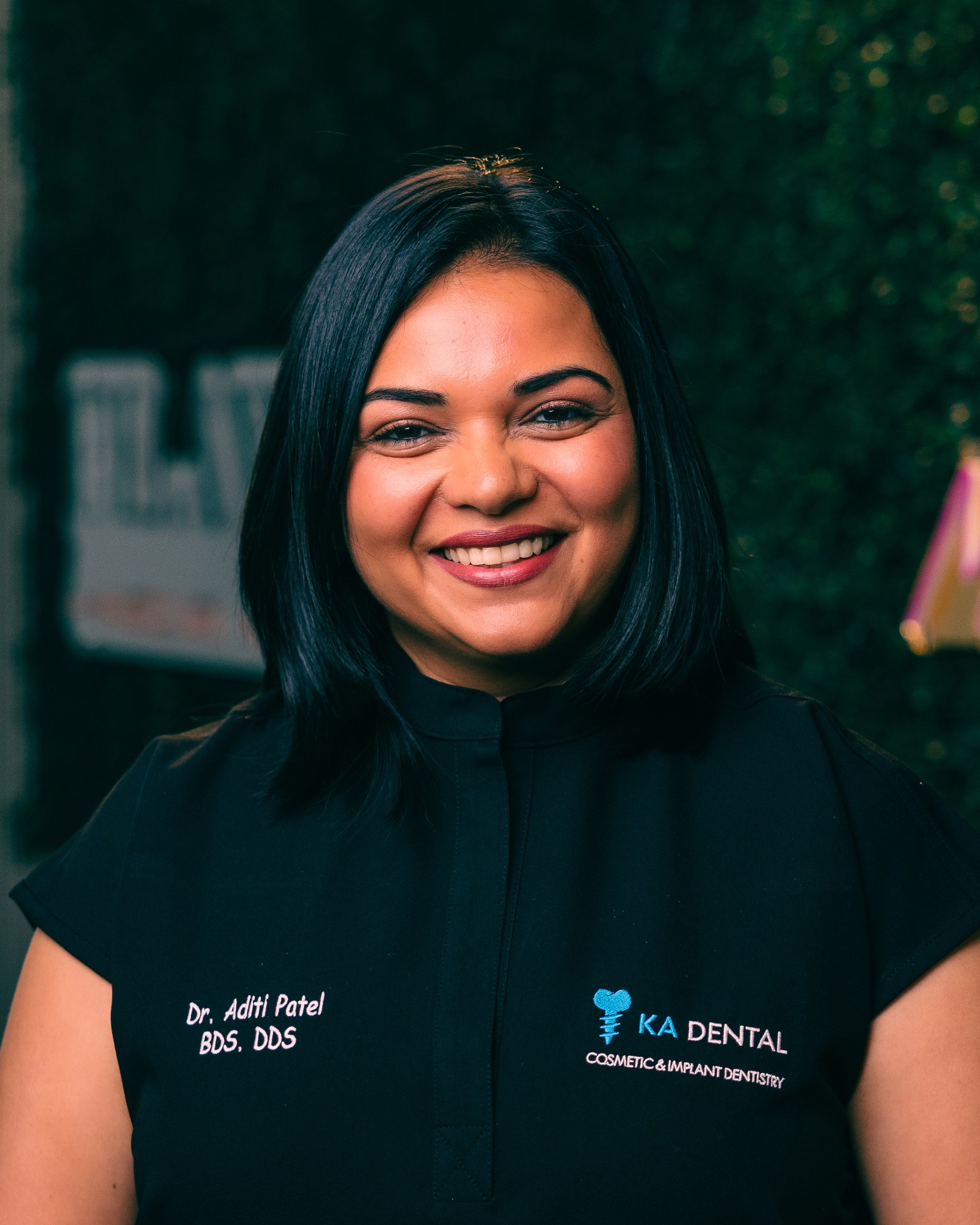
Most orthodontists recommend an initial evaluation around <strong>age 7</strong>, before all permanent teeth are in. Some kids benefit from early Phase I treatment between ages 7-9 to guide jaw development. The most common time for full braces is <strong>ages 10-14</strong>, after the permanent teeth have erupted but the jaw is still flexible. Adult braces work too — about 25% of orthodontic patients today are adults. Dr. Aditi Patel handles both Invisalign and traditional braces at KA Dental.
How long does braces treatment typically take?
Treatment time depends on complexity. Most braces cases at KA Dental run <strong>18 to 24 months</strong>. Mild cases finish in 12 months; complex cases (severe crowding, bite correction, jaw alignment) can take 24-36 months. Following our instructions — wearing rubber bands as directed, attending all adjustments, avoiding restricted foods — keeps you on the shorter end of that range. Skipping appointments or breaking brackets adds time.
Do braces hurt?
<strong>Mild discomfort, not real pain</strong>. After initial placement and after each adjustment (every 4-8 weeks), expect 2-4 days of soreness as teeth begin moving. Over-the-counter pain relievers, soft foods, and orthodontic wax for any irritated spots usually handle it. Between adjustments, braces are essentially comfortable. The biggest adjustment isn't pain — it's getting used to the feeling of brackets and learning to brush around them.
What foods should I avoid with braces?
Skip these for the duration of your braces: <strong>hard candy, ice, popcorn, nuts, hard pretzels, raw carrots, hard apples (cut into wedges instead), corn on the cob (cut off), bagels (tear into pieces), hard rolls, gum, caramels, taffy, gummy candy, beef jerky, and pizza crust</strong>. The two failure modes are <strong>breaking brackets</strong> (hard foods) and <strong>pulling off wires</strong> (sticky foods). A broken bracket is a same-day emergency that adds time and cost. Stick to the safe list and your treatment stays on schedule.
How much do braces cost at KA Dental?
Traditional metal braces at KA Dental run <strong>$3,500-$6,000</strong> for a full course of treatment. Ceramic (clear) braces are slightly more, $4,000-$7,500. Lingual braces (placed behind the teeth) range $8,000-$13,000. Most PPO dental insurance plans with orthodontic coverage pay $1,000-$3,000 toward orthodontic care — lifetime maximum. Children's plans often have higher orthodontic benefits than adult plans. We offer 0% financing through CareCredit and in-house monthly payment plans.
What's the difference between traditional braces and clear braces?
<strong>Traditional braces</strong>: silver metal brackets and wires — most affordable, fastest treatment, very visible. <strong>Clear braces</strong>: ceramic brackets that match tooth color — less noticeable, slightly more fragile, slightly more expensive. Both work via the same mechanism (brackets + wires applying gentle pressure to move teeth). Treatment time is similar. The choice usually comes down to budget and how visible you want the braces to be. Both deliver the same end result.
Is Invisalign as effective as traditional braces?
For most mild to moderate cases, <strong>yes</strong> — Invisalign achieves the same results as traditional metal braces. For severe bite issues, complex rotations, or significant tooth movement, traditional braces may still be the better option. At your consultation, Dr. Aditi Patel will assess your specific case and recommend whichever treatment will give you the best result, not just the most convenient one.
At what age should my child get braces?
The American Association of Orthodontists recommends a <strong>first orthodontic evaluation by age 7</strong>, even if no treatment is needed yet. By age 7, enough adult teeth are in to identify problems early. <strong>Phase I treatment (ages 7-9)</strong> may be recommended to address jaw growth issues, severe crowding, or harmful habits. <strong>Phase II / full braces (ages 10-14)</strong> is most common, after most permanent teeth have erupted. Some kids never need treatment; others benefit from intervention before middle school.
How much do kids' braces cost?
Kids' traditional metal braces at KA Dental run <strong>$3,500-$5,500</strong>, slightly less than adult cases on average since kids' teeth move faster. <strong>Phase I (early intervention) treatment</strong> typically costs $1,500-$3,500 if it's done before full braces. Most family PPO insurance plans include orthodontic coverage with a $1,000-$3,000 lifetime maximum that's higher for children's plans. We accept FSA/HSA for orthodontic costs and offer 0% financing through CareCredit and in-house payment plans.