Consigue Advanced Dental Imaging en KA Dental
Consúltate con los mejores dentistas de la zona en cualquiera de nuestras clínicas espectaculares, para pasar un rato súper chévere y quedarte con una sonrisa hermosa para siempre.
Aceptando nuevos pacientes
a partir de tan solo $29
Tratamiento el mismo día

Establecidos desde el 2012, tu
{
Más de 50 años de experiencia combinada, tú sabes, la crema de verdad

5 modernísimos spots

¡Más de 25,000 clients super happy!
Más de 5000 implants colocados

¡Más de 10,000 Smile Makeovers!

Laboratorio in-house para Same Day Dentistry
Preguntas Frecuentes, o sea, FAQs para Rayos X Digitales
¿Son safe los rayos X digitales?
<strong>¡Claro que sí!</strong> Los rayos X digitales usan hasta un 90% menos de radiación que los de película tradicionales. Una sola imagen es básicamente lo mismo que un par de horas de radiación natural de fondo, o sea, ¡menos que un vuelo de Miami a Nueva York! Además, te protegemos con chaleco de plomo y cuello tiroideo durante la toma. Si estás embarazada, <i>we play it safe</i> y agendamos solo lo de emergencia. Al final del día, el diagnóstico que te dan los rayos X vale muchísimo más que el mínimo riesgo de exposición. ¡Cuidarte es el <i>goal</i>!
¿Cada cuánto me tengo que hacer los dental X-rays?
La frecuencia depende de tu riesgo individual y tu historial. Como un general guide: los <strong>adultos saludables sin issues activos</strong> por lo general necesitan una serie completa cada 3 a 5 años y radiografías bitewing cada 1 a 2 años. Los <strong>kids</strong> pueden necesitarlas más seguido (cada 6 a 12 meses) porque sus dientitos y la mandíbula están en pleno cambio. <strong>Pacientes con caries activas, enfermedad de las encías o dental work reciente</strong> pueden necesitar placas cada 6 meses. Nosotros never, ever mandamos a hacer X-rays sin necesidad — solo tomamos las imágenes que sean clínicamente necesarias en cada visita.
¿Qué te pueden detectar los rayos X dentales?
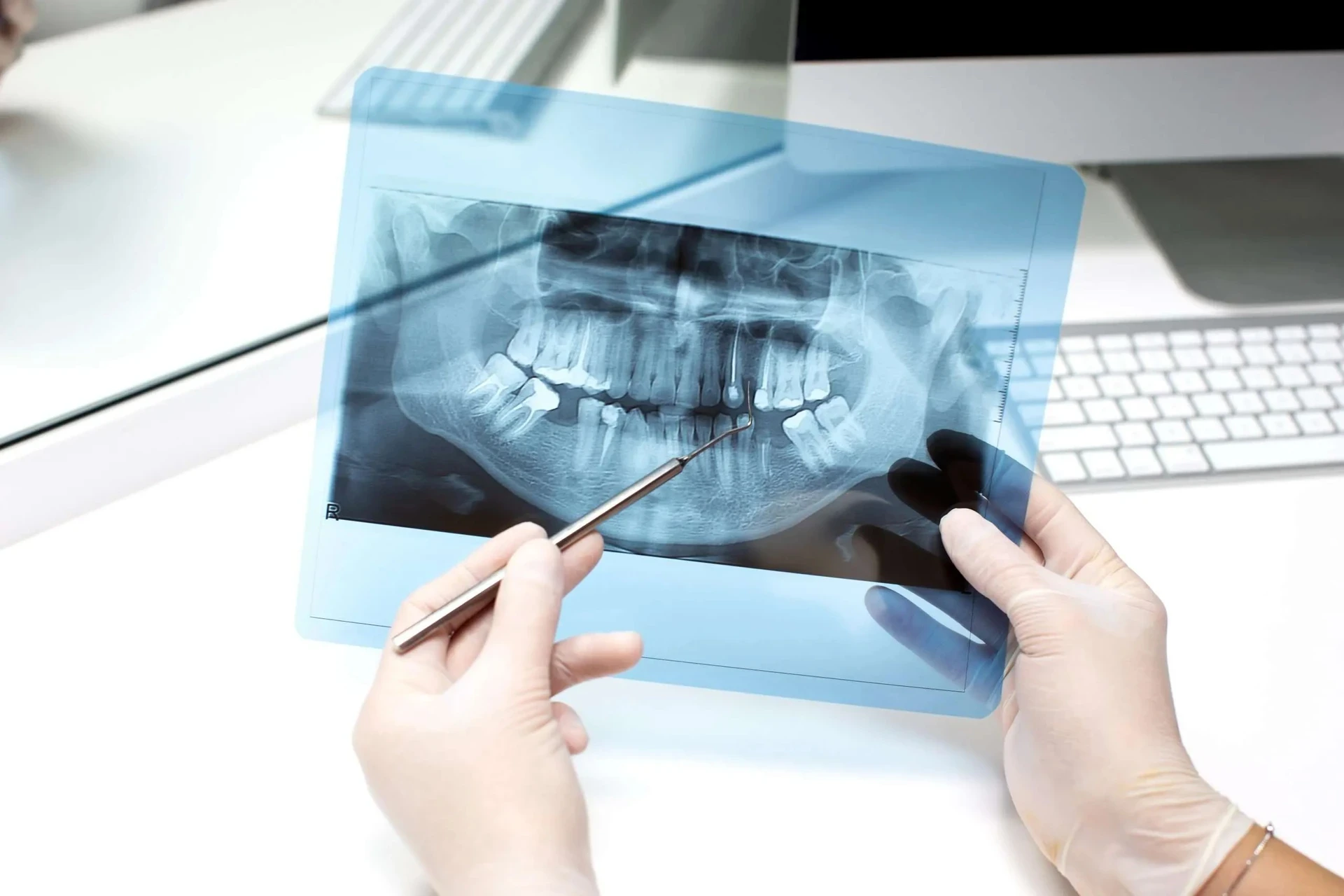
Los X-rays nos dejan ver lo que el ojo pelao no puede. Revelan <strong>caries entre los dientes y debajo de los empastes, pérdida de hueso por enfermedad de las encías, infecciones en las raíces de los dientes, cordales impactadas, quistes, tumores, anormalidades del desarrollo, problemas de alineación de la mandíbula y qué tan grave es la cosa tras un trauma</strong>. Sin los rayos X, el dentista está adivinando al tanteo. Con un buen imaging, podemos detectar los problemas años antes de que se vuelvan un dolor de cabeza o te dejen el bolsillo limpio.
¿Qué es eso de 3D cone beam imaging?
El cone beam CT 3D (CBCT) te saca un <strong>rayo X de tres dimensiones de tus dientes, mandíbula, senos nasales y nervios</strong> en un solo scan de solo 20 segundos. A diferencia de los rayos X tradicionales que son en 2D, el cone beam imaging te muestra la profundidad y la relación anatómica exacta, algo super critical para los implantes, cold cases de root canals, planificación de cirugía oral y para chequear el temporomandibular joint (TMJ). El Dr. Krunal Patel y el Dr. Amri usan el cone beam imaging rutinariamente para los casos de implantes. Y no te preocupes, que la exposición a la radiación es muchísimo menor que la de un medical CT scan de hospital.
¿El seguro cubre los rayos X dentales, o qué?
<strong>Sí, en la mayoría de los casos</strong>. Los planes de seguro dental PPO por lo general te cubren los routine bitewing X-rays al 100% como parte de tu preventive care, y el full mouth series entre un 80% y 100% (ojo, sujeto a límites de frecuencia, que casi siempre es una vez cada 3 a 5 años). Los scans 3D cone beam a veces tienen cobertura si son médicamente necesarios, often partially. Nosotros mismos verificamos tus beneficios de X-rays antes de tu cita para que sepas exactamente qué te cubre y qué no.